Your keyboard is slowing you down

First, let me give a shout-out to one of my favorite YouTube channels. If you like unique and quirky takes on history and technology, I highly recommend #Thoughty2 which piqued my interest with a video entitled: “Why your keyboard is designed to slow you down”

It all started back in 1869 when a gentleman named Samuel Soule invented not the first, but one of the first typewriters. It was an odd cantraption that looked more like a piano than a typewriter.

The big problem with this early keyboard was that the mechanism had a tendency to jam. A lot. So uncle Sam set about designing a machine with a keyboard that would separate the most used keys to avoid collision. Thus, the QWERTY keyboard was born. Ever wonder about the name? Take a look at the first 5 letters on the top row of your keyboard. You guessed it. QWERTY.

The glue that stuck this keyboard indelibly in the minds of typists everywhere was his new found partnership with the Remington corporation. Yes, THAT Remington. Bang Bang. Remington began manufacturing and selling uncle Sam’s quirky qwerty machine and before long there was no turning back.

So, while the modern keyboard may not have been designed to actually slow you down, it does none the less. Just consider that when you divide the keyboard layout in half, the left hand has 14 keys while the right hand has only 12. All you lefties out there raise your hand.

Is Zoom Killing Your Voice? Part III

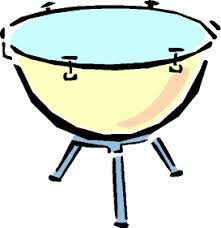
Ever wonder why a tiny bell can make so much sound? How about flicking the edge of a crystal wine glass? Better yet, what about a drum? If you remove the drum head and beat it with a drumstick is sounds like slapping spaghetti against the counter. The minute it is stretched over a brass kettle the sound fills a symphony hall. Resonance.

The minute you take a vibrating body and place it in a container, the container begins to vibrate sympathetically amplifying the sound. The more resonance you create, the less work the original vibrating body needs to achieve any given level of amplitude or loudness. The most exquisite example of this is the human voice. Two tiny little vocal chords suspended in your throat can make enough sound to break the aforementioned wine glass. Striking.

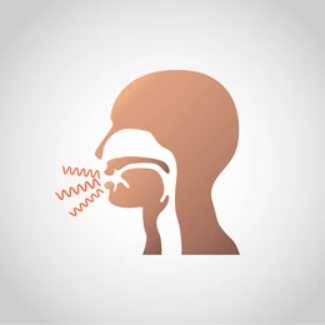
There are lots of factors controlling the resonance of the voice but the most obvious is the box it comes in. The primary resonating chamber is the pharynx – basically your throat. If your throat is closed down the resonating chamber is small. If your throat feels “Open” the resonating chamber is large. Mo space, mo resonance.

Here’s how you get there. Yawn. When you do, you experience an open throat. If you’re like most speakers you have been speaking with a closed throat all along, so this takes practice and repetition. Feel what it’s like to open the throat. Rinse and repeat. There are dozens of other exercises you can do to open the throat but knowing the sensation is the first part. Work with it and you’ll find that you can make more volume with less effort and less effort means more efficiency.

Is Zoom Killing your Voice? Part II

There is a difference in the way we use our voices since the pandemic began. We used to speak with people that were a few feet away, or perhaps at the end of the conference table. The autonomic nervous system takes care of this and we breathe normally and speak at a normal volume. But what happens when you don’t need to speak much above a whisper?

This is where we are now. We are a culture constantly speaking into a tiny mic. It doesn’t take nearly the air that speaking used to take and this can lead to problems vocally. When you are speaking at a normal volume, you intake air and the mechanism works as advertised. However, when you reduce your volume the breath is reduced. This can lead to compensation from the muscles of the voice and that can cause fatigue.

How do we fix it? Well I’m going to tell you what your 4th grade teacher told you “Sit up straight!” Being aware of your posture is the easiest remedy. When you maintain good posture, your rib cage is elevated making room for the breath. So before you start your day of endless Zoom meetings just sit up a little straighter. Not only will it save your voice, but the added O2 will give your brain a tingle.

Is Zoom Killing Your Voice? Part I

If you’re spending hours and hours on Zoom these days, you might find your voice getting tired or hoarse. If so, it might be time to re-calibrate.

In vocal pedigogy, a vocalise is is an exercise singers use to train their voices, it translates in the real-world to “vocal-ease.” This is the most fundamental quality of singing. If it ain’t easy, you’re probably not doing it right. The same thing is true of your speaking voice, if it ain’t easy…

I’m lucky, my first career was as a singer and later, a vocal coach. I had the fundamentals of vocal production ground into me. Let me tell you a little of what I learned.

First, your voice is not your own. You are in fact a recording and playback device. From the first sentence you spoke you were imitating what you heard. Because of this, the timbre and pitch of your speaking voice may not be what is called your “natural voice.” The first thing I do with new students is to help them discover where their voices lay without affectation.

Step one – record yourself. Pick something to read aloud from any source and record it on your smartphone. Listen carefully to the “Pitch” or relative low-ness or high-ness of the sound. Now go do something for an hour or two. Open your voice recorder again and this time without thinking about it, hum a single pitch or note.

Wait a while longer and listen to both sounds. If you notice a difference in the pitch of your reading voice and your “hum” it is time to re-calibrate. Let that difference sink in. Start pitching your speaking voice where your hum lives.

Creatures of Hobbit

J.R.R. Tolkein is definitely best known for The Lord of the Rings, which for many is the ultimate fantasy series. But like many great writers he did not live in the world of imagination. He was a prolific writer and thinker and one thought resonates through this time:

“Faithless is he that says farewell when the road darkens”

Tolkein was an extraordinary man who led an ordinary life. He was not a sage or full time writer or mystic or philosopher. He was a gifted human who lived a life not dissimilar to our own. Aside from LotR, he left us with 3 guidelines to live by.

  1. Pursue Lifelong passions, not short-term goals.
  2. You can create something amazing.
  3. Know what is most important to you and believe in it no matter what.

His words are simple and direct, not a poster of a cat hanging from a tree. Not a Nike slogan. Simple words to live by.

Eenie Meeny Chile Beanie

The spirits are about to speak – Rocky and Bullwinkle, a staple of the cartoon diet for all kids. In the digital age, we begin to realize how prophetic this meme of old might be. We are quick to turn computer anomalies over to Bullwinkle J. Moose and Rocket J. Squirrel; we suspect that Boris and Natasha are also at fault.

There are times when something strange happens while you are computing. You say to yourself “Gremlins” and move on. We find a work-around and keep moving. Here’s the rub…when we ignore a hiccough, there are only two possible causes, human error and program error. The glitch may be nothing, the glitch might also be something.

Especially in a corporate environment a glitch deserves our attention. It might not be a spirit, or an anomaly or a glitch. It might be something worthy of our attention. If it’s operator error (what we in the business call “Fat Fingering”) you can correct it. If it repeats, it might be something else. Something more important.

The next time you notice a glitch, do yourself and your organization a favor. Call the help desk and let them know. It may be something important they need to attend to. Rocky and Bullwinkle will thank you.

Tech Physicians

My uncle was a physician, he was a great physician because of his intuition. Sure, years of education gave him the knowledge base to draw from, but much of diagnostics was intuition. You can add up symptoms, you can evaluate conditions based on empiricism but most doctors will tell you that diagnostics is part science and part art.

Qualified computer technicians should be called computer physicians. They ask questions, they refer to their personal histories and their knowledge base but the really great computer physicians I have known have a 6th sense. Such is the case with many of the helpdesk tech’s in our department. I am not equating the value of the human tech with the value of the computer tech, but am I?

I made a tech call for a computer orientation yesterday for a new employee and part of that process is to have the new employee fill out an emergency contact form. They knew their own cell, but admitted they didn’t know their significant other’s. We both laughed at how dependent we have become.

Certainly on a level, based on our overwhelming dependency on tech, the tech physicians, like teachers in our culture deserve elevation in our esteem. Just think what your life would be like if you called the help desk and the response was “Sorry, but I have no idea.”

What’s in your wallet?

Sciatica. This is a condition where the sciatic nerve becomes compressed causing inflammation and serious pain. Doctors used to treat hundreds of patients yearly for this common problem and the first thing they would ask is: “What’s in your wallet?” For those who may not remember, a wallet used to be a small leather portfolio that you kept your essential documents and pictures in. It is the reason jeans have back pockets.

Due to technology you no longer see business people limping up the jet way because they were sitting on small briefcases. Now your phone is your wallet. You use it at Starbucks, you use it at Home Depot. Word on the street is, that it won’t be long before your phone will be replaced by your retina. Again, no back pocket required.

According to Hotspot Shield: “Perhaps one of the biggest risks with a digital wallet is the personal liability in the event of fraud. Most consumers who use debit or credit cards to pay for purchases have a level of protection from their bank or credit card company. Most do not hold cardholders liable for fraudulent purchases on their credit cards. This fraud insurance does not currently exist for consumers using digital wallets.”

However, many sources say the digital wallet is still the most secure way to make transactions. Your digital wallet must be secured by a pass code. Your phone is also secured (we hope) acing as a double layer of protection. Even if your phone is stolen the chances of your wallet being accessed are infinitesimal.

The downside of course is a reduction in Chiropractic revenues. The worst thing that can happen if you sit on a smartphone is a trip to uBreakiFix.

What message are you sending…

We are all conscious of how we respond to email and texts. We do our best to be concise and clear, we adhere to best practices within our organizations.

It took me a while, but I am finally accustomed to the shorthand that has developed, especially when texting. LOL, TY, BRB, BTW. We have made the collective agreement that shorthand is the GS (Gold Standard) but along with the message you are sending, what message are you sending?

No matter how enured we have become to a world of abbreviations, there are subtle consequences to three letter come-backs. I just wrote an important text to a colleague that took thought and time to compose. I got their response 10 minutes later. TY. Better yet, I sent the same text and didn’t receive confirmation at all. They got what they needed. Some small part of me is offended that they didn’t take 2 seconds to say thanks. TY is OK, but how much longer does it take to type “Thanks?”

In a subtle way when I receive an abbreviated response I feel diminished. When I receive no response, I feel devalued. At a subconscious level we all measure the value of our work by the response we get.

So here’s my challenge: Spend a week without sending a single abbreviation. Your world won’t change but maybe you can stop the avalanche that is reducing written communication into bits and bytes.

A single grain of sand.

Windows 10 has 10 million lines of code. The Linux kernel has 26 million lines of code. Google’s entire code base has 28 billion lines of code. The English Wikipedia alone has over 462 million lines of code ( 8 Bytes per word). A senior engineer is probably writing about 20 lines of code a day, or about 5,000 lines of code per year. These are all some staggering numbers that almost defy understanding.

What is even more remarkable is that within a given piece of software all it takes is a single line of code, sometimes a single character that can prevent an application from working or present a vulnerability. Sure there is automated debugging, but in the end, to make the world as we know it run, all it takes is a single failure.

If you’re not a programmer, it is easy to look at applications as just buttons to push. When something untoward happens and security is breached, it may be hard to appreciate how such a thing could happen. Think of it this way – if you’re flying in an Airbus A380 and a single rivet pops, it could be a very bad thing.