What’s in your wallet?

Sciatica. This is a condition where the sciatic nerve becomes compressed causing inflammation and serious pain. Doctors used to treat hundreds of patients yearly for this common problem and the first thing they would ask is: “What’s in your wallet?” For those who may not remember, a wallet used to be a small leather portfolio that you kept your essential documents and pictures in. It is the reason jeans have back pockets.

Due to technology you no longer see business people limping up the jet way because they were sitting on small briefcases. Now your phone is your wallet. You use it at Starbucks, you use it at Home Depot. Word on the street is, that it won’t be long before your phone will be replaced by your retina. Again, no back pocket required.

According to Hotspot Shield: “Perhaps one of the biggest risks with a digital wallet is the personal liability in the event of fraud. Most consumers who use debit or credit cards to pay for purchases have a level of protection from their bank or credit card company. Most do not hold cardholders liable for fraudulent purchases on their credit cards. This fraud insurance does not currently exist for consumers using digital wallets.”

However, many sources say the digital wallet is still the most secure way to make transactions. Your digital wallet must be secured by a pass code. Your phone is also secured (we hope) acing as a double layer of protection. Even if your phone is stolen the chances of your wallet being accessed are infinitesimal.

The downside of course is a reduction in Chiropractic revenues. The worst thing that can happen if you sit on a smartphone is a trip to uBreakiFix.

What message are you sending…

We are all conscious of how we respond to email and texts. We do our best to be concise and clear, we adhere to best practices within our organizations.

It took me a while, but I am finally accustomed to the shorthand that has developed, especially when texting. LOL, TY, BRB, BTW. We have made the collective agreement that shorthand is the GS (Gold Standard) but along with the message you are sending, what message are you sending?

No matter how enured we have become to a world of abbreviations, there are subtle consequences to three letter come-backs. I just wrote an important text to a colleague that took thought and time to compose. I got their response 10 minutes later. TY. Better yet, I sent the same text and didn’t receive confirmation at all. They got what they needed. Some small part of me is offended that they didn’t take 2 seconds to say thanks. TY is OK, but how much longer does it take to type “Thanks?”

In a subtle way when I receive an abbreviated response I feel diminished. When I receive no response, I feel devalued. At a subconscious level we all measure the value of our work by the response we get.

So here’s my challenge: Spend a week without sending a single abbreviation. Your world won’t change but maybe you can stop the avalanche that is reducing written communication into bits and bytes.

A single grain of sand.

Windows 10 has 10 million lines of code. The Linux kernel has 26 million lines of code. Google’s entire code base has 28 billion lines of code. The English Wikipedia alone has over 462 million lines of code ( 8 Bytes per word). A senior engineer is probably writing about 20 lines of code a day, or about 5,000 lines of code per year. These are all some staggering numbers that almost defy understanding.

What is even more remarkable is that within a given piece of software all it takes is a single line of code, sometimes a single character that can prevent an application from working or present a vulnerability. Sure there is automated debugging, but in the end, to make the world as we know it run, all it takes is a single failure.

If you’re not a programmer, it is easy to look at applications as just buttons to push. When something untoward happens and security is breached, it may be hard to appreciate how such a thing could happen. Think of it this way – if you’re flying in an Airbus A380 and a single rivet pops, it could be a very bad thing.

Gamers Part II

Every IT department has one. One individual that is the gamer’s gamer. What follows is an interesting conversation I had with the master. Since I am not a gamer, it was pretty revealing.

The first question I asked was “What is your game du jour?” The wizard answered, “Currently I’m into “Spider-Man Miles Morales”, “Demon’s Souls”, as well as “Among Us” and “Fall Guys”. “Among us” is one of the biggest games right now, it’s also the game AOC plays when she streams to connect to the gamers.

I asked, “How long have you been gaming ?” The GameMeister replied “My Grandmother gave me an Atari when I was 5 and a Nintendo Entertainment System when I was 6. At this point I am thinking to myself I was playing with G.I. Joe. So, he says, “about 35 years.”

“My passion for gaming used to be all about the game play itself, but as I’ve grown it’s become more about the stories they tell. Sometimes the stories are better than what can be told on television or in the movies.” This is where I truly revealed what a game noobie I am “Wow! It’s all about the stories…I had no idea. The scales were being removed from my eyes. He remarked “ It’s kind ‘a like a good story can be told in any number of mediums. A great story can transform a mindless, repetitive, button-mashing experience into something you walk away from going… huh, never thought I’d be thinking about this after I put it down.”

Now I am becoming more and more enthralled with the medium. As we chatted, I mentioned my interest in history only to find out that alternate history has become a big story-point in games over the last decade. He tells me “ I finished a game right before the break that is loosely based on Greek Mythology – Immortals: Fenyx Rising.”

I began to feel the itch. I remembered a friend years ago who was in love with Microsoft Flight Simulator. The Wazir sent me a link to the latest Flight Sim site. I am still picking up pieces of my jaw from the floor.

So I haven’t purchased my first game yet, but my game-O-phobia is gone thanks to a kindly gamer who took a minute to talk to me. If you’re a gamer this conversation will confirm what you already know. If you’re not, please start. The world can use a lot more passion. Passion for the arts, for play and for collaboration. Thanks Wizard.

You binge, I binge, we all binge

OK, I’m late to the game. I’ve always thought of myself as an early adopter, but I look in the mirror and find that I am not the geek I thought I was. The story goes like this.

By the writing of this post I had officially watched everything on Netflix. By this time I have watched a galaxy of Amazon Prime and have even started to digest the entire library of Peacock. I thought I had seen it all. To my chagrin I find I’m a slacker.

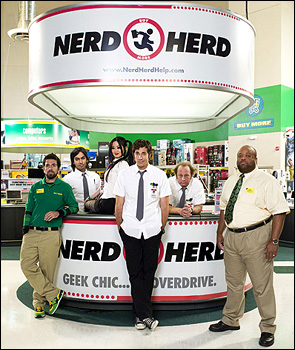
Enter “Chuck”. The premier was in September of 2007 and it took me 14 years to discover it. I can’t tell my colleagues about this, I am too embarrassed. I hope that despite the fact that I missed the seminal series of Geekdom, I may somehow be forgiven.

I watch it in the wee hours when no one is awake. I listen with headphones so no one might discover my shame. But I say to you….rise up! Embrace your birthright. Get your “Chuck” on. It’s not too late.

Amazon Prime. Go there now.

Instant Message Addiction

Hi, my name is Don and I’m an addict. In this age of WFH the first thing I do in the morning is boot my system, invoke the VPN, load my remote phone software and click on the little button for the chat application that we are using. And using. And using.

I got bupkis.

The chat application said I was off-line. I clicked “On-line” and the application stared back at me indignantly. Not to be dissuaded, I went about systematically trying to repair the problem. Yes, I did what we all do. I re-booted, I uninstalled, I manually removed any program remnants. I lit incense, chanted incantations. Still, bupkis.

In our everyday work lives, that little chat application is everything. It’s always there, it never goes down. And when it does, you realize how dependent we have become. I have to confess that I panicked.

Fortunately the gurus in my department jumped out of bed at 5am. They did that voodoo that they do and saved the day. The experience clearly indicated to me how vital and dependent we are on the basic tools of communication.

The moral of this sad story is that software is what it always was. If your chat goes down, take a breath. You can always resort to the unthinkable. You can pick up the phone and call direct. I tried it, and it works! Whodathunkit.

Eternal Vigilance is the Price of Liberty

Perhaps the largest breach of Government data happened in March of 2020. Referred to as the Solar Winds attack, it was sophisticated, unique and reached well beyond the boundaries of government data systems infecting thousands of corporations as well. This was a well planned and executed attack by a state sponsored agency. In ordinary times, this would have been the lead story in every newsroom in the country for weeks. But these are not ordinary times.

The attack was disguised as a regular application update. It effected computers at all levels of government and the private sector involving 18,000 separate organizations.

According to Steve Ryan who worked for the National Security Agency “This is bigger than anything we’ve ever experienced in the country.”

The extent of the damage is still being determined but it is a stark reminder that despite the best efforts of the brightest minds in security they are just as human as you are. It always boils down to awareness. Or as Wendell Phillips commented: “The price of liberty is eternal vigilance.

Gamers part I

Know Your Gamer – an untapped resource.

You may not be a gamer, in fact if you are the typical technology user, gaming is probably not your focus. However, understanding a little bit about the gaming community and their frame of reference can positively influence our own interactions with technology. Especially in the age of Covid we have had to learn a slew of new skills that gamers use every day. I recently had an online conversation with a buddy Chris Baldwin in ITS who is into gaming. This is what he had to say:

“Got an issue with your work-at-home technology? Seek out a gamer. Gen Z and the latter half of Millennials approach technology intuitively because of their technical native origins. So many kids are on YouTube, Twitch, Mixr, TikTok that we’re also creating a generation of video editors. I’d bet that many people at home are seeing just how technically savvy some of their kids are.

Having been part of the team that had to facilitate the move to work at home, I’ve experienced how difficult and stressful it can be to get people setup. But I’ve asked a series of gamers how this lock-down has gone for them , they shrug “not much has changed really”. It was as if everyone had to integrate into a lifestyle that we were already living in. Live streamers spent their lives in front of the camera engaging with audiences long before we had to do it in the workplace. Gamers adhere to a strict work-flow.

Gamers know the importance of software updates.

Gamers keep their computers fine tuned so they can be competitive.

Gamers keep their systems lean, clean, mean, and free from any malware or unwanted software.

I am drawn to Resource Management Games. These are games like “SimCity” or “Civilization” where you have a finite number of resources and you make something out of them. One of the games I play is “Factorio” a game which is about creating the most efficient system on an alien planet. Another is “DevTycoon” where you create a startup company in your garage and become a big tech giant. The bottom line is that when a game can procedurally generate an experience for a gamer, we keep coming back.”

There is a Benjamin Franklin quote: Tell me and I forget, teach me and I may remember, involve me and I learn. Gamers have been at their consoles learning for decades. Solving problems, overcoming obstacles and looking for possibilities. So, the next time you have a tech question, or even a life question, that kid who locks himself in his room for hours playing Fortnite, may surprise you with what they have learned.

Rinse and Repeat

To the computer, to the kitchen, to the bathroom. Rinse and repeat.

I love it that my phone gives me a weekly report on my usage. But then, I pretty much use my phone for phone stuff and do the heavy lifting at my desktop. I suppose I could download an app to keep track of my screen-time there…..but I’m scared to.

When you’re hunkered down and there isn’t anything else to do, we spend all day glued to our screen with our spreadsheets and documents. In our off-time we live in the artificial digital world of social media. Yea, I see you checking Facebook over there. Better get up and go to the kitchen or the bathroom.

When the digital world is consuming you like Ahab and the white whale let’s work on our penmanship. For that matter, let’s just generally reacquaint ourselves with the analogue world. Yes, it still exists.

Remember how to write in cursive? Still have a stray postage stamp somewhere in a drawer? Grab a legal pad. Go to the living room (if you remember where it is) and write a letter. Now head to the mailbox. A few days later you will probably get a letter in return. Open it, read it, enjoy it. Rinse and repeat.

Horseshoes and Hand Grenades

Close only counts in horseshoes and hand grenades as the old saying goes. How does this apply to computers? There is no such thing as close. While it may be said about many disciplines that: “It is not an exact science” this doesn’t apply to software.

Every programmer knows that if you spend 20 hours writing code, you might spend another 20 (or more) troubleshooting. And yet we have all experienced software that was rolled out too early and was buggy-er than a hound dog with fleas.

Now you would think, that the big boys like Microsoft and Apple and Adobe and Google would never prematurely release software that isn’t quite baked. In fact the giants are the worse offenders.

It’s one thing when your “recipe” app has a hiccough, it’s another thing entirely when your operating system has indigestion. It is almost as if they are releasing software and waiting for the user base to point out flaws.

Many operating systems are setup by default to accept “automatic updates” You might want to consider changing this setting and waiting for the update to bake just a little before you leap.

Turn off Automatic Updates for Windows 10

Turn off Automatic Updates for Mac

iPhone and iPad

Android

Personally, I wait for a month or more before I accept an operating system update. Keep your eye on the interwebs for information on the update. As soon as the complaints die down, you’re probably safe.